Eight Warehouse Shelving & Racking Systems for Export Projects
A practical shortlist for buyers comparing strength, access, density and installation risk. Each product link is preserved from the original factory catalogue so that procurement teams can review the exact system before requesting engineering support.
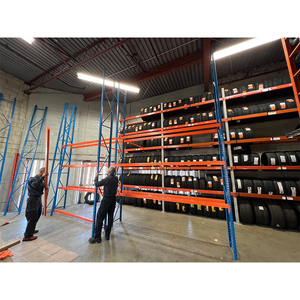
Industrial Heavy Duty Structural Pallet Rack System
A bolted structural rack for heavy-duty export warehouses where upright impact resistance, beam deflection control and repairability matter. Suitable for dense palletized inventory, manufacturing buffers and 3PL operations.
- Best forHigh-load pallets
- AccessSelective
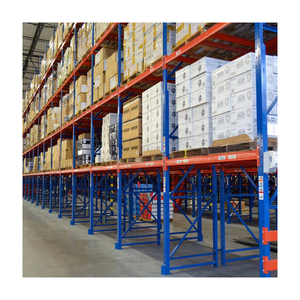
Heavy Duty Steel Pallet Racks for Warehouse Storage
A wholesale-grade selective pallet rack with heavy-duty beams and frames for warehouses that need direct access to every SKU. A strong baseline for distributors, food and beverage depots and regional distribution centers.
- Best forMulti-SKU storage
- RotationAny profile
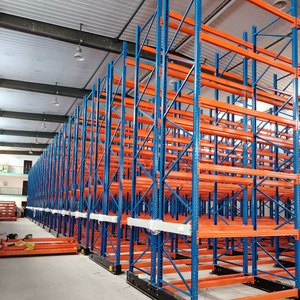
Durable Steel Selective Pallet Racking System
A durable selective racking system for logistics operations that must combine high-bay utilization with direct forklift access. The layout can be tailored to 1200×1000, 1200×800 and ISO pallets with load signage for export projects.
- Best forLogistics DCs
- Pallet formatsStandard + ISO
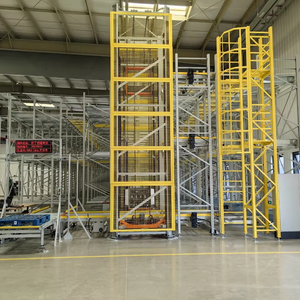
Intelligent Library Pallet Rack & Conveying System
An intelligent rack and conveying concept for high-efficiency library, archive and automated handling environments. It combines pallet rack structure with a conveying interface to coordinate dense storage and retrieval.
- Best forAutomated handling
- InterfaceConveying system
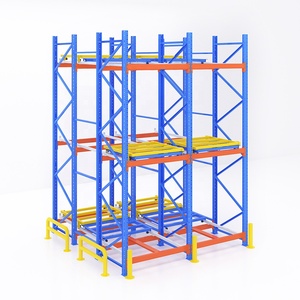
Pallet Live Rack / Push Back Pallet Rack
A push-back and pallet live storage solution for LIFO or dynamic inventory profiles. It raises storage density where SKU counts are controlled and goods move forward on rollers or carts without using one fixed aisle per bay.
- Best forDense buffers
- RotationLIFO / live
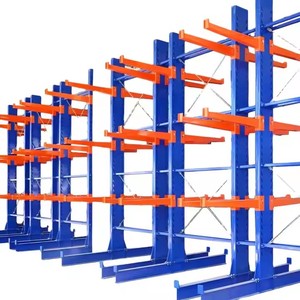
Industrial Galvanized Cantilever Warehouse Rack
A galvanized cantilever warehouse rack for long goods, tubes, profiles, timber and awkward loads. Galvanizing helps resist humidity, coastal air and temperature changes, making it relevant for export yards and industrial warehouses.
- Best forLong materials
- FinishGalvanized
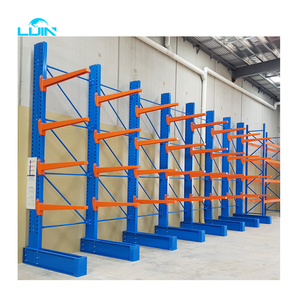
Factory Price Heavy Duty Cantilever Storage Rack
Factory-price cantilever racking engineered for heavy industrial storage. The open front allows forklifts or cranes to load long materials from the aisle while arms and bases are calculated for the actual load and handling method.
- Best forHeavy long goods
- HandlingForklift / crane
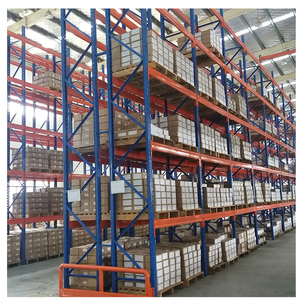
Heavy Duty Industrial Selective Pallet Rack
A heavy-duty selective pallet rack for industrial warehouses that need a proven balance of access, density and cost. It suits multi-SKU operations, spare-parts storage and distribution centers with frequent picking.
- Best forFast access
- Use caseIndustrial storage
Factory and Export Capability in Numbers
These indicators should be read as a starting point for supplier due diligence. Serious buyers still verify the project-specific calculation, bill of materials, packing plan and installation scope behind each number.
Countries with installed storage systems
Warehouse projects delivered
Annual steel production capacity
Output exported worldwide
Why a Racking Factory Must Be Evaluated Like an Engineering Supplier
Warehouse shelving and racking is safety equipment, not a commodity by the kilogram. International buyers increasingly ask for steel grades, section properties, connection details, anchor calculations, assembly tolerances and traceability before they compare price.
A top exporter should make engineering inspectable
This is where information gain matters. A useful supplier page should explain how the system behaves under load, how the destination code changes the design and how the installation team proves that the warehouse is safe after handover. A catalogue photo is not enough.
- Load case: static versus dynamic load, beam deflection limits, upright capacity and floor loading.
- Site conditions: seismic zone, soil class, humidity, coastal air, temperature and clear height.
- Operating model: SKU count, pallets per SKU, throughput, forklift type, automation interface and inspection access.
- Compliance route: local code, welding quality, steel certificates, anchor design, load signage and component traceability.
Which Racking System Fits the Operating Profile?
Use this matrix for early-stage layout studies. Final selection depends on the pallet, building height, throughput, temperature, fire strategy and seismic zone.
| System | Best fit | Storage density | Direct access | Rotation |
|---|---|---|---|---|
| Selective pallet racking | High SKU mix, food and beverage, retail distribution | 100% of pallets | Any | |
| Very narrow aisle racking | Expensive land, cold stores and tall buildings | 100% of pallets | Any | |
| Double-deep racking | 3PL operations with multiple pallets per SKU | About 50% | LIFO per lane | |
| Drive-in racking | Homogeneous products, frozen goods and seasonal inventory | Low | LIFO; FIFO if drive-through | |
| Mobile pallet racking | Cold storage and high-value space where every cubic metre is cooled | 100% via one open aisle | Any | |
| Pallet flow racking | Perishables and fast-moving inventory requiring FIFO | Per lane | FIFO | |
| Push-back racking | Manufacturing buffers and mid-volume SKUs | Per lane | LIFO | |
| Pallet shuttle racking | High-throughput distribution centers and deep cold lanes | Per lane | FIFO or LIFO | |
| AS/RS and self-supporting | Large DCs, 24/7 operations and deep-freeze warehouses | Automated | Any under WMS control |
Density is relative to selective racking in the same footprint. In seismic zones, very tall or very dense configurations require specific structural verification.
Future Procurement Trends for Warehouse Racking Buyers
The buying decision is shifting from a price-per-kilogram comparison to an engineered outcome. Procurement teams now need to compare installed cost, code compliance, automation readiness and lifecycle risk in one business case.
Total cost of ownership replaces lowest unit price
Buyers increasingly ask for maintenance access, replacement-part availability, repair strategy and expected service life. A lower beam price can become expensive if the layout causes forklift damage, poor inspection access or a costly future reconfiguration.
Local seismic and climate compliance moves into the RFQ
Chile, Peru, Colombia, Ecuador, Argentina and Brazil all require project-specific design attention. Buyers now expect the racking manufacturer to name the design code, explain anchor and bracing assumptions and supply load signs that match the installed configuration.
Automation-ready steelwork becomes a baseline requirement
Even manual warehouses are being prepared for AMRs, conveyors, shuttles or a future AS/RS phase. This changes tolerances, guard design, pick-face geometry and data requirements. A rack supplier that cannot coordinate with integrators creates avoidable risk.
Cold-chain energy performance drives storage density
Fruit, seafood, meat and frozen-food exporters are comparing mobile racking, VNA, drive-in and self-supporting freezer structures against the cost of cooling empty aisles. The procurement question is no longer just “how many pallets?” but “how much energy per pallet position?”
Where Warehouse Shelving and Racking Technology Is Moving
The next cycle of warehouse storage development is being shaped by land costs, labour availability, cold-chain growth, automation interfaces and verifiable sustainability data.
High-bay VNA and self-supporting structures
As land and energy become more expensive, rack-supported buildings and very narrow aisle layouts are being used to reach higher clear heights without adding floor area. This demands tighter tolerances and closer coordination between racking, cladding, fire protection and handling equipment.
Pallet shuttle and high-density dynamic racking
Semi-automated deep lanes are moving beyond niche applications. For high-throughput DCs and freezer warehouses, pallet shuttle systems offer a practical middle ground between conventional selective racking and full AS/RS investment.
AMR and AGV compatible racking
Mobile robots require predictable floor interfaces, protected uprights, clear pick faces and stable load presentation. Racking design is therefore becoming an automation-integration task, not only a steel calculation.
Freezer-grade steel and finishes
Cold stores down to −30 °C place different demands on steel toughness, coating, condensation control and maintenance. Buyers now ask for low-temperature performance evidence rather than a generic “cold storage” label.
FEM simulation and laboratory validation
Finite-element modelling, physical load testing and university R&D partnerships are becoming part of the commercial argument. Buyers want to see that a new profile or connector has been validated beyond a catalogue table.
Verified carbon and repairable components
Sustainability claims are shifting from slogans to documentation. ISO 14064 verified carbon reporting, recyclable steel, repairable components and clear replacement-part strategies help exporters respond to green procurement requirements.
Factory Advantages That Reduce Export Risk
A warehouse racking purchase crosses engineering, manufacturing, logistics and installation. The supplier must control enough of that chain to keep the project aligned when drawings, shipping schedules or site conditions change.
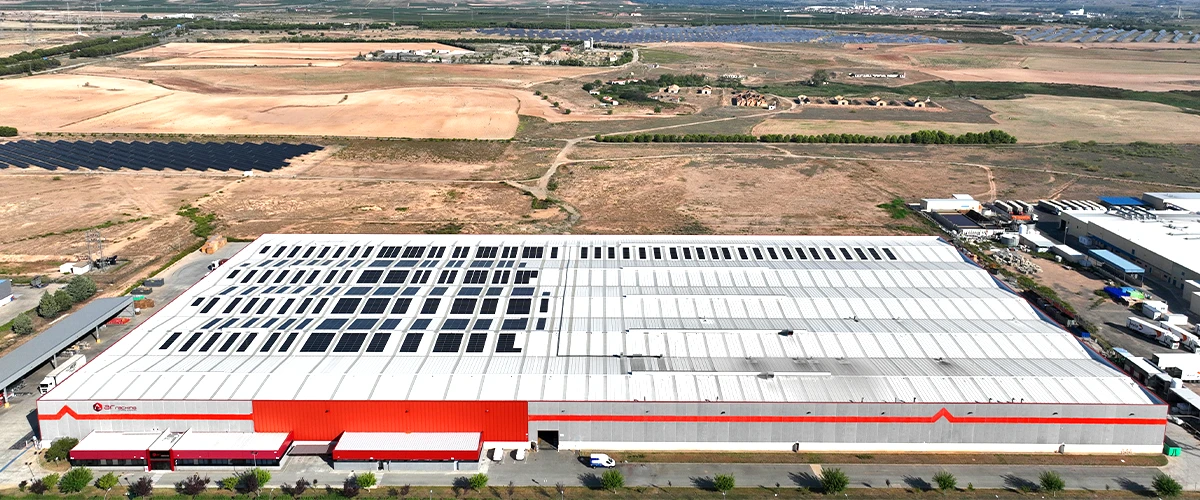
Highly automated production capacity
The 35,000 m² production centre and over 100,000 t annual capacity support large export orders with consistent quality. Automated production helps keep frames and beams within the tolerances required by robotic and manual warehouses.
R&D and laboratory validation
Our technology centre works with a Mondragon University R&D laboratory and a research and simulation chair at the University of the Basque Country. Component behaviour, strength and safety are studied under real load cases and transferred into calculation models.
Certified quality and 5-year warranty
Systems are produced under ISO 9001, ISO 14001, ISO 45001, ISO 50001, UNE EN ISO 3834-2 welding quality, EN 1090-1 and ISO 14064 verified carbon reporting. Full component traceability supports inspection, maintenance and replacement.
Export network and port experience
More than 90% of output is exported, supported by 14 own branches and 70+ distributors. Logistics experience covers major ports and destinations including Santos, Callao, San Antonio, Cartagena and Buenos Aires.
Seismic and local-code engineering
Projects can be checked against local requirements such as NCh2369 and NCh433 in Chile, E.030 in Peru, NSR-10 in Colombia, NEC in Ecuador, ABNT NBR 15524 in Brazil and INPRES-CIRSOC 103 in Argentina. Bracing, base plates, anchors and row spacers are adapted to the site.
Lifecycle support from layout to inspection
Project engineering, structural calculation, installation supervision, technical rack inspection and maintenance can be coordinated as one service. This matters after handover, when damaged components or a layout change must be resolved without stopping operations.
Factory Evidence, Not Just Claims
Experienced buyers look for proof in production, testing and delivered projects. These three evidence areas show how engineering decisions move from the laboratory to a working warehouse.
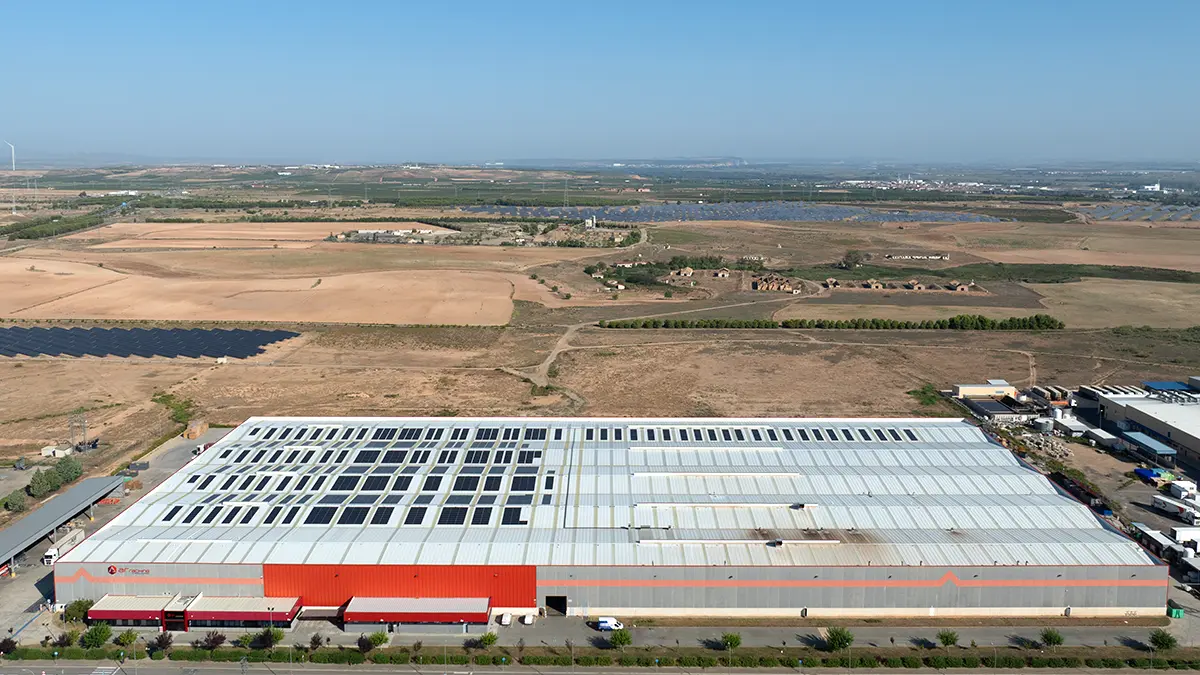
Automated production precision
Robotic production and laser-controlled processes help keep every frame and beam within the tight tolerances required by AS/RS integrators and by manual warehouses that need fast, safe installation.
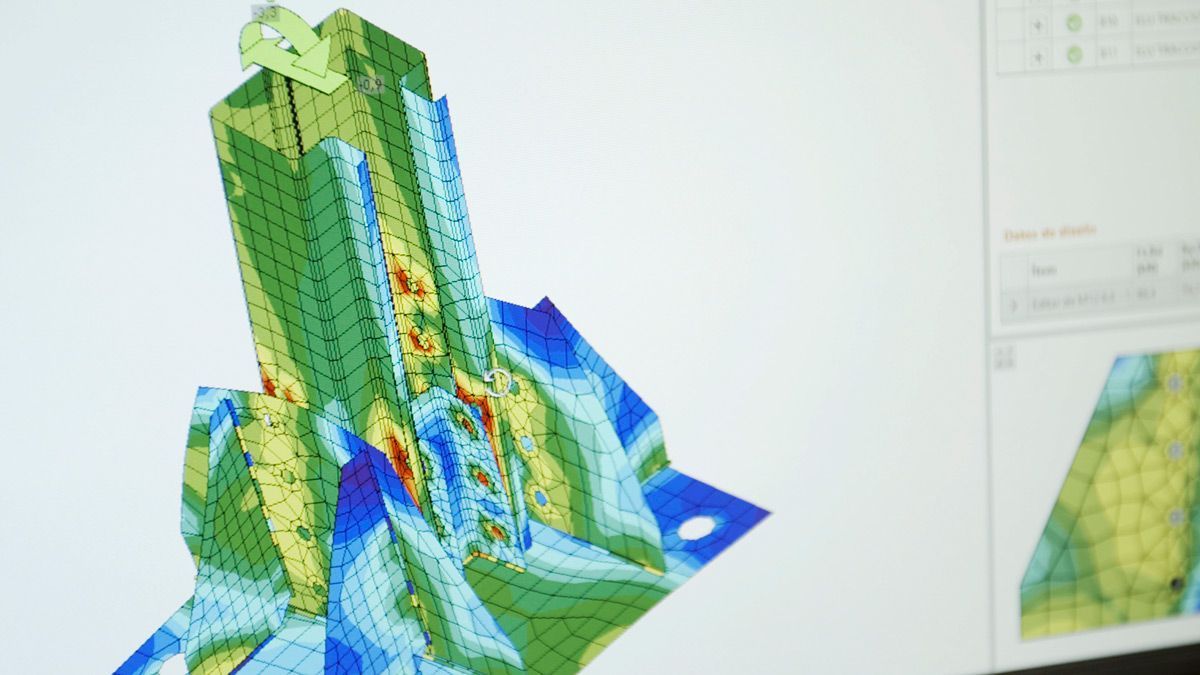
Laboratory and simulation validation
Physical testing and finite-element simulation help validate new profiles, connections and base details. The result is a design process that can respond to seismic demand, heavy loads and cold-store conditions with evidence.
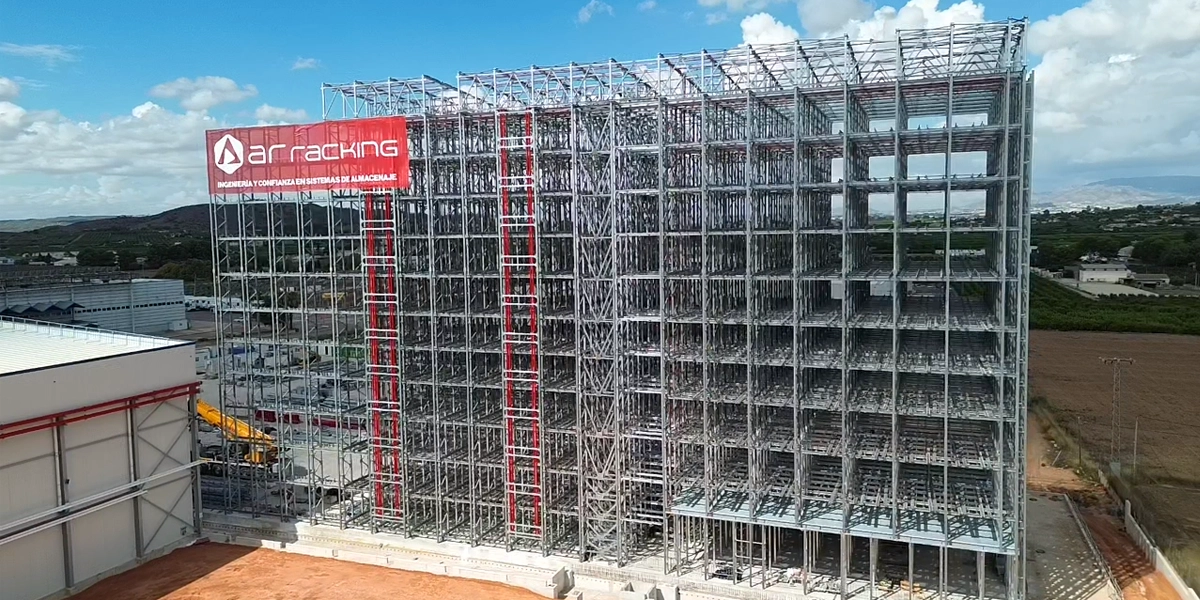
Cold-chain project delivery
Self-supporting freezer warehouses can combine racking with the building envelope. A recent project concept reached 23,000 pallet positions at −24 °C, showing how storage density and cold-chain energy performance can be engineered together.
Warehouse Racking Procurement FAQ
These are the questions our export engineering team receives most often from warehouse, logistics and procurement managers comparing suppliers.
What should buyers verify before choosing a China warehouse shelving and racking factory and exporter?
Start with the engineering file, not the product photo. Request upright and beam section properties, steel grade certificates, beam-to-column connection details, base plate and anchor calculations, load signs, welding quality records and a project-specific layout. Verify the design code used for the destination country, especially in seismic zones. Also confirm who supervises installation, how damaged components are replaced and whether a 5-year warranty is backed by traceable production records. A supplier that can answer these questions before an order is a lower-risk exporter than one that only sends a price per kilogram.
How can I confirm that the stated load capacity is suitable for my pallets?
Share the pallet length, width, height, weight, load type, number of pallets per bay and whether the load is uniformly distributed. Capacity is not one number: it depends on beam span, deflection limit, upright load, shelf level, pallet support and dynamic forces from forklifts. Ask for a load calculation and a load sign for each bay. For export projects, the calculation should reflect the destination code and site conditions. If a supplier cannot explain the difference between static and dynamic load, treat the quotation as incomplete.
Can the racking be engineered for Chile, Peru, Colombia, Ecuador, Brazil or Argentina?
Yes, but the design must be localized. Chile requires checks against NCh2369 and NCh433; Peru uses E.030; Colombia uses NSR-10; Ecuador uses NEC; Brazil applies ABNT NBR 15524 and related practice; Argentina may require INPRES-CIRSOC 103 checks in seismic regions. Seismic design can change upright bracing, base plates, anchors, row spacers, beam deflection limits and the allowable height-to-depth ratio. A generic catalogue design should not be used in these markets without project-specific verification.
Which pallet sizes, temperatures and warehouse conditions can be supported?
Common formats include 1200×1000 mm, 1200×800 mm, 1100×1100 mm, 1219×1016 mm and the Brazilian PBR 1000×1200 mm. Frame depths and beam lengths are set from the real pallet and load, not from a single standard. For cold stores, steel and finishes can be selected for temperatures down to −30 °C, with attention to low-temperature toughness, condensation, ice, cleaning chemicals and future freezer expansion. Ambient, chilled and deep-freeze areas should be defined separately in the RFQ.
How do I choose between selective, drive-in, push-back, pallet shuttle and AS/RS?
Use the operating profile. Selective racking gives 100% access and suits high SKU counts. Drive-in and push-back increase density but restrict access. Pallet shuttle is strong for high-throughput deep lanes and deep-freeze operations. Very narrow aisle saves floor space and can work with specialized forklifts. AS/RS and self-supporting structures make sense when volume, height, throughput and labour costs justify automation. The right answer is the lowest-cost system after capacity, throughput, safety, energy and maintenance are included, not the system with the most pallet positions on paper.
What certifications, warranty and documentation should come with an export order?
A serious export package can include ISO 9001 quality management, ISO 14001 environmental management, ISO 45001 occupational health and safety, ISO 50001 energy management, EN ISO 3834-2 welding quality, EN 1090-1 structural steel components and ISO 14064 verified carbon reporting where relevant. Ask for steel certificates, component traceability, packing lists, installation drawings, load signs, inspection records and a 5-year warranty statement. Documentation should match the exact project, not just a generic certificate folder.
How are shipping, installation and after-sales handled for overseas buyers?
Typical export scope can be ex-works, FOB, CIF or delivered with installation supervision. The factory prepares container loading plans, labels and component lists so the site team can receive and assemble the racking in sequence. Installation can be supervised by factory-trained supervisors or delivered through trained distributors and local partners. After-sales support should include spare parts, inspection guidance, damage assessment and replacement components. Clarify what is included before shipment, especially anchors, row spacers, load signs, unloading and site labour.
What information is needed for a fast quotation and layout?
Send a building layout with clear height, floor condition, column grid and available aisle width; pallet dimensions and weights; number of SKUs and pallets per SKU; daily inbound and outbound volumes; forklift or automation type; temperature range; fire strategy if known; destination city or port; and target installation date. A marked-up drawing or photos of the site reduce engineering questions. With that information, the export team can propose a system, prepare a preliminary layout and identify the load cases that need structural verification.
Request a Layout Study From the Factory-Exporter
Send your pallet data, building height, throughput, temperature and destination. Our storage engineers will review the load case and recommend a racking system that fits the real operating profile rather than a generic catalogue size.
Inquire Now