Countries with installed storage systems
Warehouse projects delivered
Annual steel production capacity
Warranty supported by full traceability
A Racking Partner Built for Export Procurement, Not Just Price Lists
It is easy to find a catalogue of warehouse shelving racks. It is much harder to find a manufacturer that can prove how the upright was calculated, how the beam-to-frame connection behaves under load, how the system performs in a seismic zone, and whether the export packing will survive port handling. For buyers comparing China top warehouse shelving racks manufacturer & exporters, those details separate a low-cost quote from a low-risk project.
Alohatop Shelf approaches racking as an engineered export product. The company designs, manufactures and installs industrial racking and automated warehouse structures, supported by a 35,000 m² highly automated production centre and more than 100,000 t of annual capacity. More than 90% of output is exported, with a project record covering 42,000+ warehouse projects in more than 60 countries.
This page adds practical procurement intelligence: which systems fit which operating profile, how buying criteria are changing, what technical evidence should be requested before a purchase order, and which certifications support a safer, faster approval process. The goal is not to publish a wall of specifications, but to help project teams ask better questions before they commit capex.
Supplier Verification Checklist Before You Approve a PO
- Request load-deflection calculations, steel grade and material certificates.
- Confirm EN 1090-1, UNE EN ISO 3834-2 welding controls and ISO 9001 quality management.
- Ask for seismic verification if the project is in Chile, Peru, Colombia, Ecuador or another active zone.
- Check the container loading plan, export packing and port handling experience.
- Verify spare parts, installation support, load signage and the 5-year warranty process.
8 Warehouse Shelving Rack Products for Project Procurement
These products cover the most common export requirements: selective pallet storage, push-back density, stacking, mezzanine platforms, heavy-duty industrial racking, cantilever storage, combined pallet and picking shelves, and multi-layer stacking systems. Product links are retained exactly as supplied.
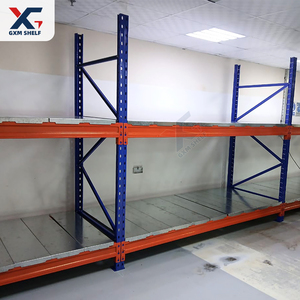
GXM Adjustable Stainless Steel Pallet Rack System Boltless Rack Storage Warehouse Heavy Duty Shelving
Hygienic, boltless stainless steel racking for food, pharmaceutical, wet and cold-chain environments where corrosion resistance and easy cleaning matter.
View product details →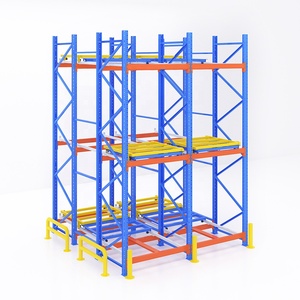
Pallet Live Rack Push Back Pallet Rack
High-density LIFO push-back racking for manufacturing buffers, finished goods and fast-moving SKUs that benefit from deep lanes without fixed aisle access.
View product details →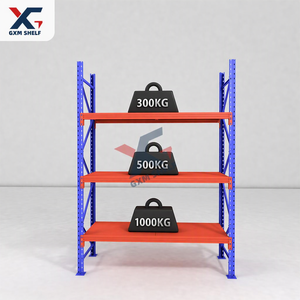
Heavy Duty Rack System Warehouse Storage Stacking Warehouse Shelf Racking Warehouse Racks Heavy Duty
Portable heavy-duty stacking rack for flexible layouts, temporary capacity and 3PL operations that need dense, organised storage without fixed installation.
View product details →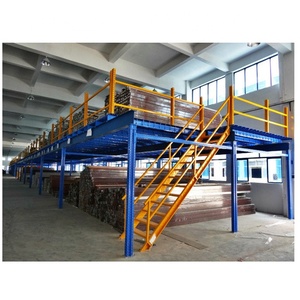
Mezzanine Shelf Storage Heavy Duty Rack System Metal Racks Warehouse Mezzanine Platform
Structural mezzanine platform that converts unused vertical height into picking, spare-parts or e-commerce space, with options for shelving, conveyors and guarding.
View product details →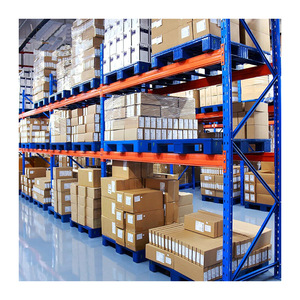
Mracking Heavy Duty Metal Pallet Storage Racking 1000kg/2000kg/3000kg Per Layer Industrial Pallet Shelving Rack
Selective industrial pallet racking for 1000 kg, 2000 kg or 3000 kg per layer, suited to distribution centres, 3PL warehouses and mixed load profiles.
View product details →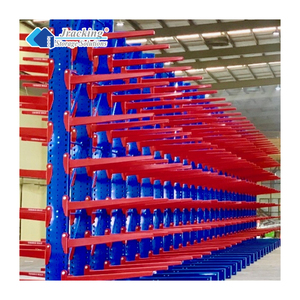
CE-Certified Industrial Warehouse Storage Shelves Heavy-Duty Cantilever Racking System for Cold Storage Pipe Storage
CE-certified cantilever racking for pipes, tubes, timber and long cold-storage goods, configured around load centres, forklift handling and safe access.
View product details →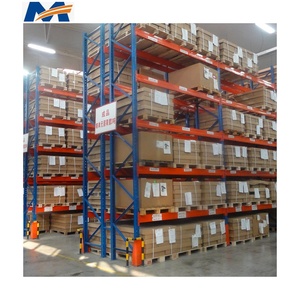
Pallet Racking System Warehouse Shelves Heavy Duty, Warehouse Picking Shelves Rack
Hybrid pallet racking and picking shelves for warehouses that must store full pallets and pick cartons in one bay, supporting wholesale, retail and spare-parts operations.
View product details →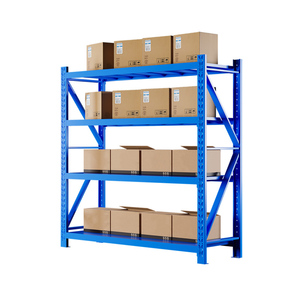
Industrial Warehouse Storage 5-Layer Pallet Racking System with Tire Rack Slotted Angle Rack Stacking Racks & Shelves
Five-layer pallet racking and stacking system with tire rack and slotted angle options for automotive, tire distribution and dense industrial storage.
View product details →Not sure which system fits your pallet, clear height and throughput? Send the basic layout and load data to our engineers.
Send an InquiryProduct Recommendations Mapped to Real Warehouse Operations
The right racking system is determined by SKU profile, pallet count, load weight, building height, temperature, forklift type and the cost of floor space. A simple density comparison is not enough.
Mixed-SKU Distribution Centres
Choose selective pallet racking with picking shelves when every pallet must remain directly accessible and replenishment speed matters more than maximum density.
Cold Storage and High Land Cost
Very narrow aisle, mobile and drive-in racking increase pallet positions per cubic metre, a critical advantage when cooled volume and real estate are expensive.
High-Throughput and Dense SKUs
Pallet shuttle and pallet flow systems reduce aisle count and support FIFO or LIFO discipline for fast-moving consumer goods, 3PLs and frozen distribution.
Long Goods and Non-Pallet Inventory
Cantilever, mezzanine and stainless steel shelving solve special handling needs for pipes, timber, spare parts, food-grade items and e-commerce order picking.
Procurement Trends Shaping Racking Purchases Through 2026–2030
Buyers are moving away from unit-price comparison toward total project risk. The most competitive racking suppliers will be those that can prove engineering, safety and delivery control.
Total Cost of Ownership Replaces Lowest Unit Price
Procurement teams now compare installation time, damage risk, spare-part availability, maintenance access and energy use in cold storage. A slightly higher rack cost can reduce total cost across a 10–20-year lifecycle.
Safety and Seismic Documentation Become Bid Gates
For projects in Chile, Peru, Colombia or Ecuador, racking must be calculated against local seismic requirements and soil class. Buyers increasingly request calculation reports, anchor details, row spacers and load signage before award.
Automation-Ready Racking Is Specified Earlier
AS/RS, AMR and pallet shuttle projects require tighter tolerances, coordinated beam levels and interface data from the rack supplier. Racking is no longer a late-stage purchase; it is part of the automation master plan.
Resilient Export Logistics and Modular Delivery
Container optimisation, export packing, phased delivery and installation sequencing are now part of the commercial offer. Manufacturers who can combine factory control with port experience reduce project pauses and site rework.
What the Next Generation of Warehouse Shelving Racks Must Deliver
Racking development is being driven by higher bays, colder stores, automated handling and stricter safety cultures. The product itself is becoming more engineered, more documented and more integrated.
High-Strength Steel and Robotic Welding
Robotic production and laser-controlled processes keep frames and beams within tight tolerances, improving repeatability for large orders and supporting the precision required by automated stacker cranes and shuttles.
Digital Traceability and Load Signage
Component traceability from production batch to installation, clear load signs and as-built drawings are becoming standard deliverables. They support inspections, maintenance planning and safer day-to-day operation.
Cold-Chain and Corrosion-Resistant Finishes
Freezer warehouses down to −30 °C, washdown areas and humid ports require suitable steel, coatings and detailing. Mobile, drive-in, VNA and self-supporting freezer systems are expanding the design envelope.
Circular Design and Carbon Reporting
Steel recovery, recyclable packaging and verified carbon reporting are becoming part of tender evaluation. ISO 14064 verification and a 5-year warranty strengthen the environmental and reliability case.
Compare Racking Systems Before You Issue an RFQ
Use this matrix for early planning only. Final selection depends on load calculation, pallet condition, building height, fire strategy and local code requirements.
| System | Best Fit | Relative Density | Direct Access | Typical Application |
|---|---|---|---|---|
| Selective Pallet Racking | Mixed SKUs and fast access | 2 / 5 | 100% of pallets | Retail, food, 3PL distribution |
| Very Narrow Aisle (VNA) | Tall buildings and cold storage | 4 / 5 | 100% of pallets | Freezers, urban DCs, high land cost |
| Drive-In Racking | Homogeneous products and few SKUs | 5 / 5 | Low | Beverage, frozen goods, bulk inventory |
| Pallet Shuttle | High-throughput dense lanes | 5 / 5 | Per lane | FMCG, 3PL, deep cold storage |
| Cantilever / Mezzanine | Long goods or multi-level picking | 3 / 5 | Specialised | Pipe storage, e-commerce, spare parts |
Why Alohatop Shelf Is a Credible Choice Among China Top Warehouse Shelving Racks Manufacturer & Exporters
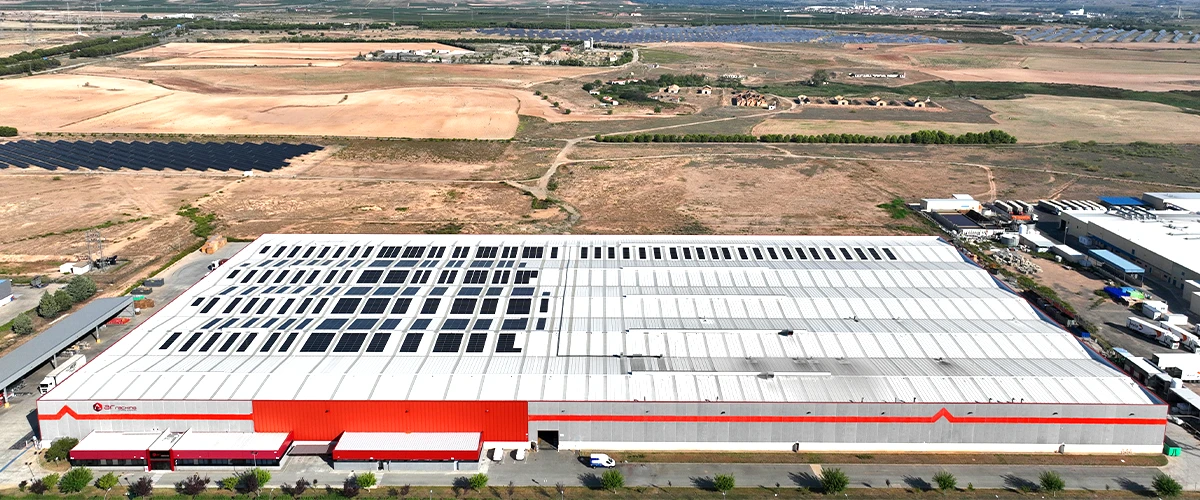
Alohatop Shelf is not a catalogue trader. The company controls design, structural calculation, manufacturing and installation, with a 35,000 m² highly automated production centre and more than 100,000 t of annual steel capacity. More than 90% of output is exported, supported by 14 own branches and 70+ trained distributors.
The project record includes 42,000+ warehouse projects in more than 60 countries. Each system is backed by a 5-year warranty and full component traceability, so warehouse teams can connect a beam, upright or safety accessory to the correct production batch.
- Factory-controlled production rather than outsourced assembly.
- Export packing, container loading plans and port experience for destinations including Santos, Callao, San Antonio, Cartagena and Buenos Aires.
- Engineering documentation suitable for tender review, installation planning and long-term inspection.
- One accountable partner from layout study to final load signage.
Engineering Validated in the Laboratory, Not Just on Paper
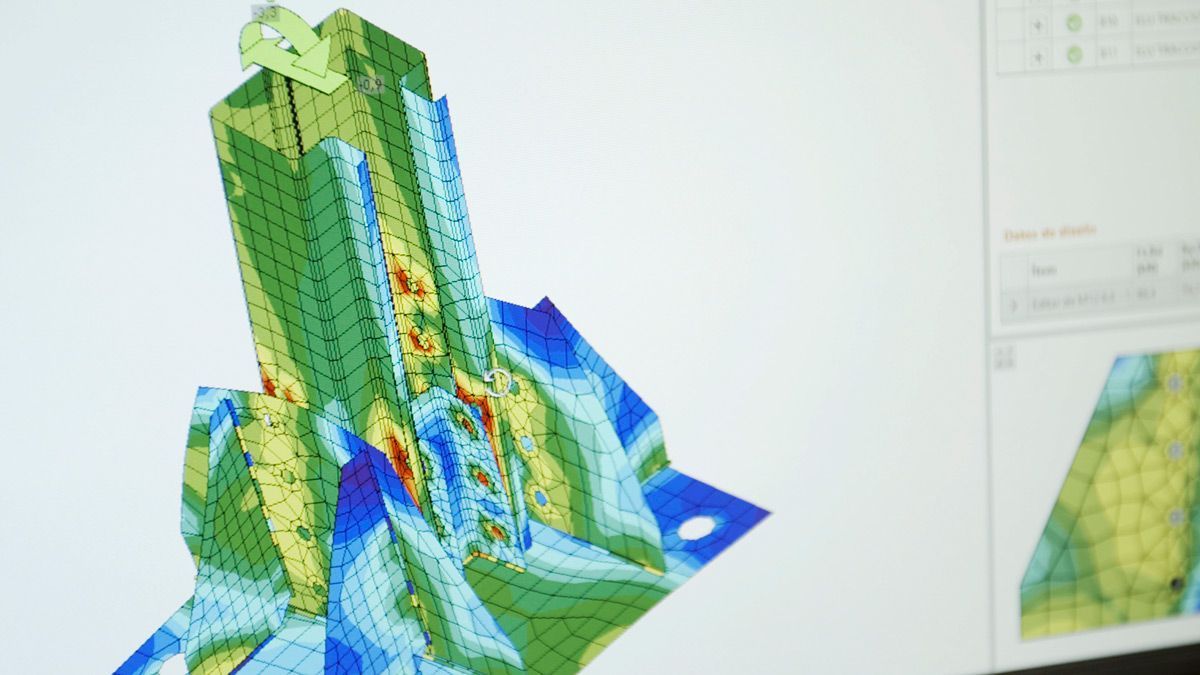
The in-house technology centre works with an R&D laboratory at Mondragon University to test the behaviour, strength and safety of racking components under real load cases. A research and simulation chair at the University of the Basque Country develops calculation models and simulation tools.
That work flows directly into frames, beams and connections designed for heavy loads and high seismic demand. Finite-element simulation, physical load testing and cyclic testing help reduce uncertainty before a system reaches the warehouse floor. For buyers, this is practical risk reduction: fewer installation surprises, more predictable performance and better documentation for approvals.
Certification Evidence That Supports E-E-A-T
Independent management-system certifications, welding controls and structural-steel qualifications reduce procurement risk. They also make it easier to compare suppliers on evidence rather than sales claims.
ISO 9001
Quality management system
ISO 14001
Environmental management
ISO 45001
Health and safety at work
ISO 50001
Energy management
EN ISO 3834-2
Welding quality control

EN 1090-1
Structural steel components
How to Specify a Racking Project: Information Gain Checklist
A complete RFQ reduces change orders, delays and installation risk. Include these eight data points before asking for a final quotation.
Provide CAD or PDF drawings, column grid, available height, floor condition and any obstructions such as sprinklers or doors.
State pallet length, width, height, weight and load distribution, including damaged-pallet tolerance and overhang limits.
List number of SKUs, pallets per SKU, daily inbound and outbound movements, and whether FIFO or LIFO is required.
For Chile, Peru, Colombia, Ecuador or other seismic markets, confirm the local code and site soil class for calculation.
Confirm ambient, chilled or freezer operation, minimum temperature, humidity and fire-protection requirements.
Identify counterbalance, reach truck, VNA, AGV, AMR or AS/RS interface. This affects aisle width, tolerances and beam levels.
Share the destination port, container type, site access and installation schedule so the packing and delivery plan can be engineered.
Confirm local design codes, inspection requirements, documentation language and any client-specific vendor prequalification.
Frequently Asked Questions About Warehouse Shelving Racks
Are you a manufacturer or a trading company?
Alohatop Shelf designs, calculates, manufactures and installs industrial racking and automated warehouse structures. The company operates a 35,000 m² highly automated production centre, works with 14 own branches and 70+ trained distributors, and exports to more than 60 countries.
What is the typical MOQ and lead time for export orders?
Racking is usually project-based rather than sold by single pieces. Standard selective racking can be supplied in container-load quantities, while custom and automated systems follow approved drawings, finish, packing and shipping schedules. Lead time is confirmed after layout, load data, steel profile, surface finish and destination port are fixed.
How do you verify load capacity and safety?
Capacity is calculated from pallet weight, beam span, frame depth, load height, seismic demand and operating conditions. Systems are produced under ISO 9001, UNE EN ISO 3834-2 welding controls and EN 1090-1 structural-steel requirements, with component traceability and load signage. A 5-year warranty supports the delivered system.
Can racking be designed for seismic zones?
Yes. Projects can be checked against local requirements such as NCh2369 and NCh433 in Chile, E.030 in Peru, NSR-10 in Colombia and NEC in Ecuador. Typical measures include reinforced uprights and bracing, heavier base plates and anchors, row spacers and reduced beam deflection limits.
Can you supply cold-store and freezer racking?
Yes. Mobile racking, drive-in, VNA, pallet shuttle and self-supporting freezer warehouses can be supplied with steels and finishes suited to temperatures down to −30 °C. This is relevant for fruit, seafood, meat, frozen food and other cold-chain exporters.
What information is needed to start a racking project?
Send a building layout with clear height, pallet dimensions and maximum load, number of SKUs and pallets per SKU, daily throughput, forklift or automation type, temperature range, project city and destination port. Our engineers use this information to propose the safest and most space-efficient storage system.
Request a Layout, Load and Export Packing Review
Share your pallet data, clear height, throughput and destination port. Our engineering team will help compare selective, high-density, cold-store or mezzanine options and prepare a practical specification for your next warehouse project.
Send an Inquiry