Custom OEM Pallet Racks for Wholesale and Project Procurement
These eight pallet rack configurations cover the most common warehouse requirements: high-density shuttle storage, selective access, LIFO manufacturing buffers, multi-level storage and heavy-duty logistics racking. Each product URL is kept exactly as supplied.
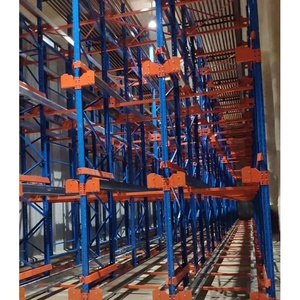
Customized Steel Pallet Rack Stacking Racks & Shelves Warehouse Storage Rack Heavy Duty Shuttle Racking for Industrial
Recommended for high-throughput distribution centers and cold stores where deep lanes, reduced forklift travel and semi-automation improve pallet density.
View OEM specification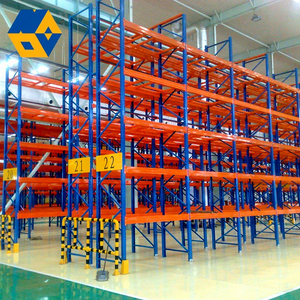
Customized Competitive Industrial Warehouse Storage Steel Heavy Duty Pallet Rack
A practical wholesale baseline for mixed-SKU warehouses that need 100% pallet selectivity, straightforward forklift access and flexible reconfiguration.
View OEM specification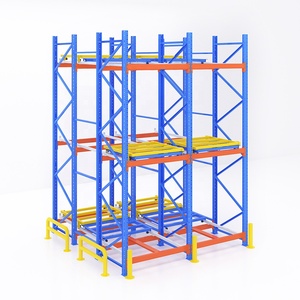
Pallet Live Rack Push Back Pallet Rack
Best-fit for manufacturing buffers and medium-velocity SKUs that benefit from LIFO storage, denser pallet lanes and reduced aisle space.
View OEM specification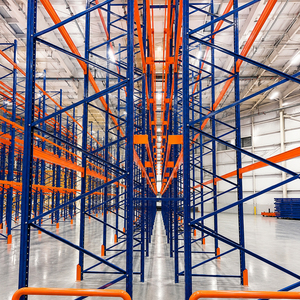
Heavy Duty Pallet Rack 1000kg Steel Storage Rack for Logistics Center 24h Technical Support Premium Pro
A 1,000 kg-class logistics rack with 24-hour technical support; suitable for distribution centers seeking a robust, repeatable wholesale rack specification.
View OEM specification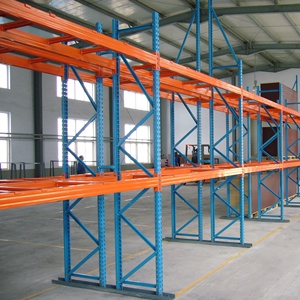
Adjustable Heavy Duty Pallet Rack Shelf Two Levels Custom High Load Capacity Industrial Warehouse Storage Pallet Racking System
Designed for warehouses with clear height and compartmentalized storage needs, where a two-level adjustable structure improves space utilization.
View OEM specification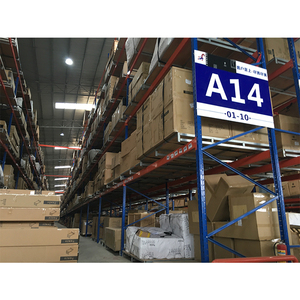
Industrial Storage Rack Heavy Duty Steel Pallet Rack System for Warehouse Organization
A general industrial pallet rack system for organized warehouse storage, scalable wholesale programs and projects requiring fast specification cycles.
View OEM specification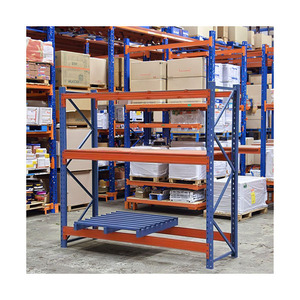
Selective Pallet Racking System Stable Modular Steel Distribution Center Warehouse Storage Rack 2000kg Heavy Duty
Stable modular selective racking for 2,000 kg-class loads, distribution centers and high-turnover warehouses needing direct access to every pallet.
View OEM specification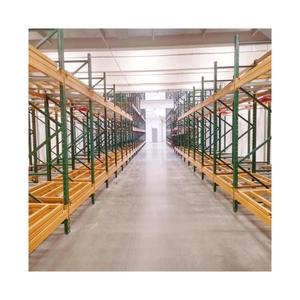
Custom Storage System Stacking Racks Shelves Warehouse Rack Push Back Pallet Racking with Guide Rail
Custom LIFO push-back racking with guide rails for controlled pallet travel, denser storage lanes and repeatable OEM production for wholesale buyers.
View OEM specificationCountries with installed storage systems
Warehouse racking projects delivered
Annual steel production capacity
Of production exported worldwide
What Wholesale Buyers Should Expect From a Custom Pallet Rack Manufacturer
Search intent for “custom OEM industrial pallet racks manufacturer & wholesalers” usually comes from distributors, project contractors and warehouse owners who need more than a catalogue price. They need engineering calculations, consistent fabrication, documentation and a supplier that can support installation and long-term rack safety.
Factory-to-Project Control
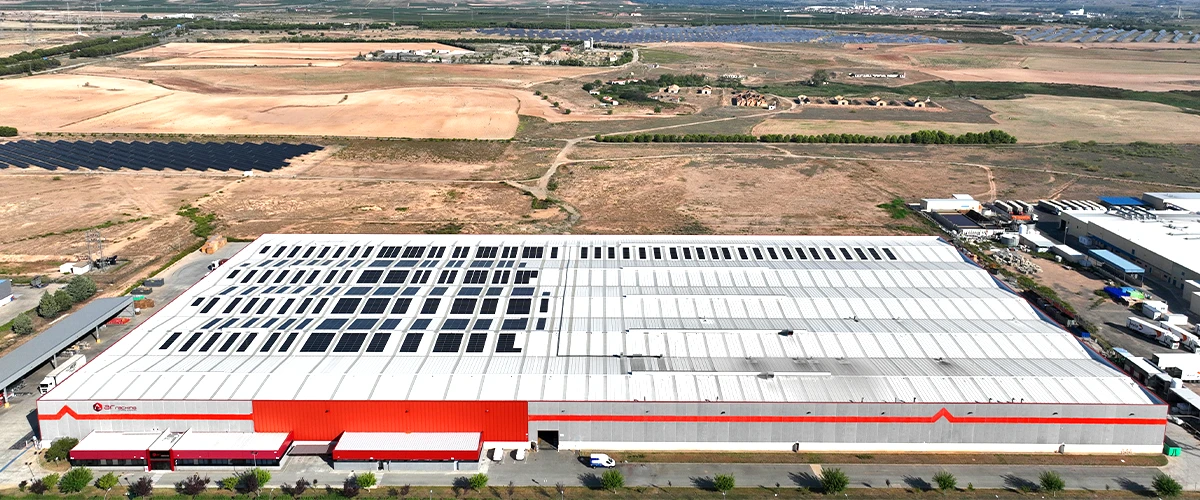
Alohatop Shelf operates a 35,000 m² highly automated production centre with more than 100,000 t of annual steel capacity. Manufacturing control reduces specification drift, improves lead-time reliability and protects component traceability from production batch to installation.
Code-Based Engineering
Projects in seismic markets are not treated as standard racking. Designs are checked against the destination environment and local requirements, including reinforced uprights, heavier base plates, row spacers, reduced beam deflection limits and appropriate anchoring.
Wholesale Export Support
With more than 90% of output exported, 14 branches and a network of 70+ distributors, Alohatop Shelf supports wholesale programs, project documentation, packaging and shipment coordination for international racking orders.
How Industrial Pallet Racks Are Evolving
Pallet racking is no longer a static steel commodity. Rack geometry, tolerances and documentation now influence automation integration, cold-chain energy performance, construction permits and long-term maintenance costs.
Automation-Ready Geometry
AS/RS, pallet shuttle and AMR projects require tighter fabrication tolerances, verified frame alignment and predictable load deflection. OEM buyers are asking for rack data that can be used directly by automation integrators.
Seismic and Safety Engineering
Racking in Chile, Peru, Colombia and Ecuador is increasingly specified against local seismic codes, with anchoring, bracing and row spacing reviewed as part of the structural package rather than as an afterthought.
Cold-Chain and High Density
Fruit, seafood, meat and frozen-food supply chains are pushing demand for mobile, VNA, drive-in, shuttle and self-supporting freezer warehouses using steels and finishes suitable for temperatures down to −30 °C.
Traceability and ESG Evidence
Component traceability, verified carbon reporting and management-system certifications are becoming procurement requirements. Alohatop Shelf supports these expectations with ISO 14064 verification and full component traceability.
What Pallet Rack Wholesalers and Project Buyers Will Demand Next
The lowest quotation is rarely the lowest total cost. Buyers are moving toward supplier consolidation, evidence-based specifications and lifecycle budgeting. The table below summarizes the procurement levers that give professional buyers a measurable advantage when sourcing custom OEM industrial pallet racks.
| Procurement Lever | What to Require in the Bid | Commercial Benefit | Evidence to Demand |
|---|---|---|---|
| Total Cost of Ownership | Unit price, expected service life, inspection plan, spare parts and warranty terms | Lower downtime and fewer emergency purchases | 5-year warranty, component traceability and maintenance programme |
| Seismic Compliance | Site-specific calculations for the destination country and soil class | Safer permits and reduced project risk | Design reports aligned with NCh2369, E.030, NSR-10 or local codes |
| Automation Readiness | Manufacturing tolerances, frame alignment, beam deflection and integration data | Smoother AS/RS, shuttle or AMR commissioning | Robotic production controls, weld quality and inspection records |
| Cold-Store Performance | Steel grade, finish, lane depth, temperature range and maintenance access | Reliable operation in freezer and chilled environments | References for cold storage, VNA, mobile or self-supporting projects |
| ESG and Certification | Management-system certificates, welding certification and carbon reporting | Stronger tender position and supply-chain credibility | ISO 9001, ISO 14001, ISO 45001, ISO 50001, EN ISO 3834-2, EN 1090-1 and ISO 14064 |
| Supplier Consolidation | OEM manufacturing, engineering, documentation and export support under one contract | Fewer handoffs and clearer accountability | Factory scale, project references, export capacity and branch network |
Why Alohatop Shelf Is a Reliable OEM Pallet Rack Manufacturing Partner
E-E-A-T matters in industrial sourcing because failed racking is not a cosmetic issue. It affects safety, permits, insurance, automation uptime and the credibility of the installer. Alohatop Shelf combines manufacturing depth, engineering validation and export experience to reduce those risks.
Manufacturing Scale
35,000 m² automated production centre, 100,000 t annual capacity and more than 90% of output exported. Full traceability links every upright and beam to its production batch.
Certified Quality
ISO 9001, ISO 14001, ISO 45001, ISO 50001, UNE EN ISO 3834-2 welding quality, EN 1090-1 and ISO 14064 verified carbon reporting support demanding tenders.
R&D and Testing
Our technology centre works with a Mondragon University R&D laboratory, while a research and simulation chair at the University of the Basque Country supports calculation models and structural simulation.
Global Project Support
60+ countries served, 14 own branches and 70+ distributors. Engineering teams adapt racking to seismic zones, cold stores, logistics hubs and automated warehouses.
What a Serious OEM Pallet Rack Supplier Should Be Able to Prove
Information gain in industrial SEO comes from showing buyers what to verify, not simply repeating product claims. Before placing a wholesale order or appointing an OEM manufacturer, request evidence that the supplier can control the full chain from steel to installed rack.
- Structural calculations: pallet load, beam deflection, upright capacity, anchor design and seismic verification where applicable.
- Fabrication quality: automated roll-forming, robotic welding and laser-controlled processes that maintain AS/RS tolerances.
- Component traceability: batch-level records for uprights, beams and accessories, supported by documented inspection.
- Certification coverage: quality, environment, safety, energy, welding and structural steel documentation for tender packages.
- Laboratory validation: physical load testing and finite-element simulation for frames, beams and base connections.
- Export and installation support: project drawings, packing, shipping coordination and installation supervision through trained teams.
Which Pallet Racking System Fits Your Warehouse?
Use this engineering comparison as an early-stage filter. Final selection depends on SKU profile, pallet condition, throughput, building height, forklift type and seismic zone. A custom OEM manufacturer should verify every assumption before fabrication.
| System | Best For | Relative Density | Pallet Access | Stock Rotation |
|---|---|---|---|---|
| Selective Pallet Racking | Mixed SKUs, food and beverage, retail distribution centers | 42% | 100% direct access | Any rotation rule |
| Very Narrow Aisle (VNA) | High land cost, cold stores, tall buildings | 61% | 100% direct access | Any rotation rule |
| Double-Deep Racking | 3PL operations with two or more pallets per SKU | 64% | 50% direct access | LIFO per lane |
| Push-Back Racking | Manufacturing buffers and medium-velocity LIFO storage | 70% | Per lane | LIFO |
| Drive-In Racking | Homogeneous goods, frozen products and low-SKU warehouses | 82% | Low selectivity | LIFO; FIFO if drive-through |
| Pallet Shuttle | High-throughput DCs and deep cold lanes | 92% | Per lane | FIFO or LIFO |
| AS/RS and Self-Supporting | Large automated DCs, 24/7 operations and deep-freeze warehouses | 98% | Automated | WMS controlled |
Custom OEM Industrial Pallet Racks: Common Buyer Questions
These answers reflect the questions our engineers receive from warehouse owners, distributors and project buyers during technical and commercial evaluation.
What is the minimum order for custom OEM pallet racks?
Minimum order depends on the rack type, profile, finish, packaging and project schedule. A practical OEM or wholesale programme can be phased by bay, by aisle or by shipment, but the most efficient unit cost usually comes from consolidating frames, beams and accessories into one production batch.
Can you manufacture to our drawings, packaging and brand requirements?
Yes. OEM manufacturing can follow approved drawings, project specifications and buyer documentation. Alohatop Shelf also provides full component traceability from production batch to installation, which helps distributors and project contractors maintain consistent quality across repeat orders.
How are pallet racks designed for seismic zones in South America?
Racking is calculated against the local code and site conditions. Examples include NCh2369 and NCh433 in Chile, E.030 in Peru, NSR-10 in Colombia and NEC in Ecuador. Typical measures include reinforced uprights, heavier base plates and anchors, row spacers and reduced beam deflection limits.
Which pallet sizes and loads can be accommodated?
Common formats include 1200 × 1000 mm pallets widely used in Latin America, Brazilian PBR 1000 × 1200 mm, 1200 × 800 mm Euro pallets and ISO sizes such as 1100 × 1100 mm and 1219 × 1016 mm. Beam lengths, frame depths and load ratings are dimensioned for the actual pallet and maximum load weight.
Can pallet racking operate in cold storage and freezer warehouses?
Yes. Alohatop Shelf supplies mobile racking, drive-in, VNA, pallet shuttle and self-supporting freezer warehouses using steels and finishes suited to temperatures down to −30 °C. This is relevant for fruit, seafood, meat and frozen-food exporters as well as cold-chain distributors.
What certifications and warranty support the racking systems?
Systems carry a 5-year warranty and are produced under ISO 9001, ISO 14001, ISO 45001, ISO 50001, UNE EN ISO 3834-2 welding quality, EN 1090-1 and ISO 14064 verified carbon reporting. Documentation can support tender submissions and supplier qualification.
What information is needed to start a warehouse racking project?
Send a building layout with clear height, pallet dimensions and maximum load weight, number of SKUs and pallets per SKU, daily throughput, forklift or automation type, temperature range and project city. Our engineers use this information to propose the most efficient storage system and prepare a technical quotation.
Do you support installation and long-term rack safety?
Yes. Alohatop Shelf supports project engineering, installation supervision, technical inspection and maintenance. Periodic inspections help identify impact damage, overloads and anchoring issues before they become operational incidents, protecting people, stock and uptime.
Planning a Custom Pallet Racking Project or Wholesale Programme?
Share your building layout, pallet dimensions, load data, throughput profile and destination country. The Alohatop Shelf engineering team can recommend the right OEM pallet rack configuration, prepare a technical proposal and support your project from production to installation.
Inquire Now Email: [email protected] · Industrial racking and storage systems for global projects