Eight gravity-flow and high-density racking systems for Machala buyers
Start with the product family that matches your pallet flow, SKU profile and building. Every system below can be engineered for Ecuadorian pallet formats, cold-room temperatures and NEC seismic requirements.
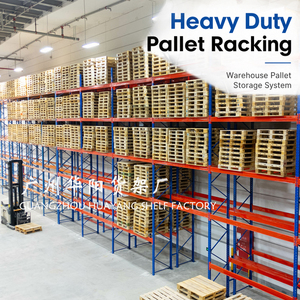
3000KG Per Level Heavy Duty Pallet Rack Industrial Warehouse Storage Steel Shelving Adjustable Pallet Racking System
A 3,000 kg-per-level workhorse for banana cartons, shrimp cases and mixed export pallets where beam levels must change by season.
- Up to 3,000 kg/level
- Adjustable beams
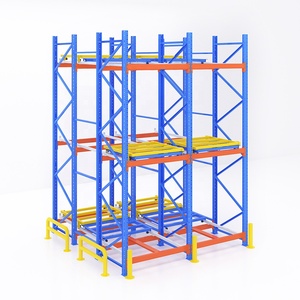
Pallet Live Rack Push Back Pallet Rack
A compact LIFO buffer for processing lines, consolidating two to five pallets deep without adding extra aisles.
- LIFO lanes
- High-density buffer
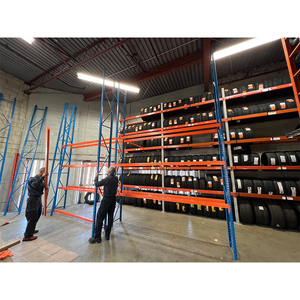
China Supplier Industrial Stacking Racks Heavy Duty Type Structural Pallet Rack System
Structural pallet rack for heavy cocoa, rice, fertilizer or industrial spares where impact resistance and long service life matter.
- Structural steel
- Impact resistant
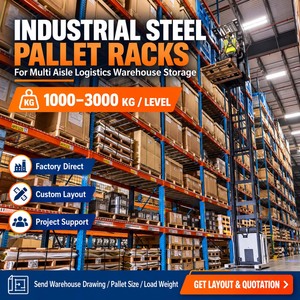
Selective Pallet Racking System with Adjustable Beam Levels for Different Pallet Heights
The flexible base layout for mixed-SKU export warehouses, with adjustable levels for changing pallet heights.
- 100% selective access
- Adjustable levels
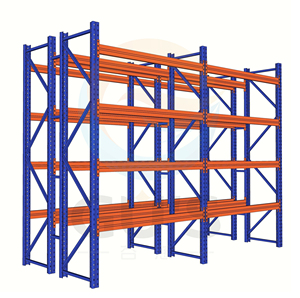
Warehouse Pallet Racking Shelves Unit Industrial Heavy Duty Metal Rack Storage Shelf Pallet Stacking Rack System
A factory-price storage shelf and pallet stacking system for distributors, cold rooms and spare-parts stores.
- Industrial duty
- Export packing
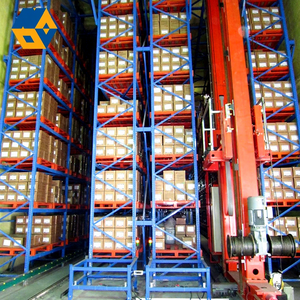
NOVA Automated Storage and Retrieval System ASRS Stacker Crane Pallet Warehouse Animation Rack System
For larger Machala exporters planning high-bay automation, AS/RS stacker-crane racking can link WMS control with dense pallet storage.
- AS/RS integration
- High-bay precision
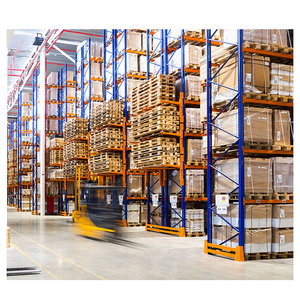
Adjustable Heavy Duty Pallet Rack System Selective Steel Beam Racking for Industrial Warehouse Storage Management
Selective steel-beam racking for managers who need adjustable heavy-duty levels, straightforward inspection and phased expansion.
- Adjustable heavy duty
- Easy inspection
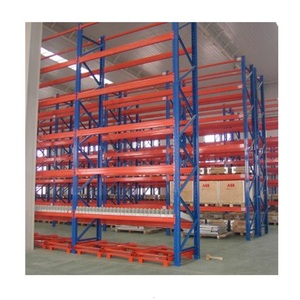
Industrial Heavy Duty Rack Factory Price Steel Pallet Racking Storage Systems From Warehouse Pallet Rack Manufacturer
Direct-from-manufacturer pallet racking for wholesalers, project contractors and multi-site distributors serving El Oro.
- Factory price
- Project quantities
Gravity Flow Pallet Racking for Machala: A Buyer’s Guide to FIFO, Density and Export Reliability
Machala is not a generic warehouse market. It is an export-facing agricultural and cold-chain economy where storage layout directly affects lot control, loading speed and the cost of every cooled cubic metre.
Machala is the commercial heart of El Oro province and one of Ecuador’s most important banana, shrimp, cocoa, coffee, mango and general export corridors. The port system around Puerto Bolívar, together with the Guayaquil gateway, puts a premium on warehouses that can receive, hold, pre-cool, consolidate and release pallets quickly. In that environment, a racking system is not simple steel. It is the physical control layer that determines whether FIFO discipline is respected, whether cold-room air can circulate, whether forklifts spend their time moving product or waiting, and whether a seasonal peak becomes a bottleneck.
Gravity flow pallet racking—also called pallet flow, live storage or flow racking—uses inclined roller or wheel lanes. Pallets are loaded at the rear and move by gravity to the picking face, with a speed controller or brake roller managing the descent. Because the first pallet loaded is the first pallet released, the system delivers FIFO rotation without double handling. For Machala exporters handling perishable, batch-coded or customer-specific goods, that single characteristic can be more valuable than a headline price per pallet position.
The commercial case is strongest where SKUs are repeatable and pallets are stable. A banana packing house may need a compact buffer between packing and container loading; a shrimp processor may need FIFO release from a freezer; a cocoa or rice trader may need dense storage for homogeneous lots; a 3PL may need a hybrid layout where selective racking handles mixed SKUs and gravity flow handles the fast movers. In suitable layouts, gravity flow can reduce aisle count and raise pallet positions per cubic metre, often by 30–50% compared with conventional selective racking on the same footprint, but the final figure must be confirmed by a layout study that includes building columns, clear height and forklift turning geometry.
Pallet release follows the load sequence, supporting lot control and shelf-life discipline.
Indicative pallet-position gain in suitable high-throughput layouts versus selective racking.
Fewer forklift trips per pallet when fast movers are assigned to flow lanes.
The engineering details that decide success
Gravity flow is simple in concept and unforgiving in detail. Lane slope, roller pitch, wheel material, pallet condition, load weight, beam deflection, brake rollers and extraction space must work together. A low-cost lane that jams in a humid Machala cold room is more expensive than a correctly specified lane. Buyers should ask for lane calculations based on the actual pallet, not a catalogue average, and should require component traceability from uprights and beams to rollers and safety accessories.
- Pallet quality and flatness: returnable, repaired or damp wooden pallets are a common cause of flow-lane stoppage.
- Humidity and washdown: galvanized or coated rollers, drainage details and ventilation should match the room’s cleaning routine.
- Temperature: freezer-grade lubricants and low-temperature polymer wheels are specified for cold-chain operation.
- Seismic anchorage: base plates, anchors, bracing, row spacers and frame design must reflect Ecuador’s NEC framework and site soil class.
- Safety: impact protection, load signs, aisle markings and a periodic inspection plan protect people, stock and uptime.
Ecuador’s NEC framework and site soil conditions must be reflected in the structural design. A rack that is adequate in a low-seismic warehouse may not be adequate in a tall, high-density installation in El Oro. For export projects, we review the rack layout against the local code, the building interface and recognized racking design methods such as EN 15512, FEM 10.2.02 and RMI MH16.1. The deliverable should include drawings, load limits, anchor details and an inspection plan, not just a packing list.
Humidity is the second local design driver. Machala’s coastal climate and cold-room operations can accelerate corrosion on unprotected steel and can affect roller performance. Specifying the right finish—powder coating, galvanizing or a combined system—is a commercial decision with a maintenance consequence. The same logic applies to pallets: damp or damaged wooden pallets are the most common cause of flow-lane stops. A simple pallet inspection and replacement routine protects uptime more effectively than adding more automation before the basics are under control.
Where gravity flow and high-density racking fit in Machala
Different export products create different storage problems. The right system is the one that removes double handling without creating a new bottleneck at the loading dock.
Banana packing houses and cold-room staging
In banana export, pallets move from packing lines to pre-cooling, inspection and container loading. Gravity flow lanes create a disciplined FIFO buffer that reduces double handling and keeps the next pallet accessible at the face. Lanes should be sized around the actual carton pallet footprint, airflow needs and the peak loading window.
Shrimp, fish and frozen seafood
Cold stores operating at −18 °C to −25 °C penalty every unnecessary forklift movement. Pallet flow, push-back and high-density selective systems can increase positions per cubic metre while protecting FIFO release. Low-temperature rollers, corrosion protection and rapid-access inspection are essential in freezer rooms.
Cocoa, coffee, rice and dry export commodities
Machala’s agricultural traders and wholesalers often handle homogeneous lots with long dwell times and mixed pallet conditions. Selective racking forms a flexible base; gravity flow or push-back lanes can be added for repeat fast movers. Humidity control, clean aisles and load signage matter as much as steel capacity.
Mango, plantain, retail distribution and 3PL
Seasonal peaks reward a modular product matrix rather than a single system. Use adjustable selective racking for mixed SKUs, FIFO flow lanes for perishables and AS/RS for larger hubs with predictable throughput. For 3PLs, the layout must remain flexible when clients and pallet profiles change.
Machala procurement trends reshaping racking decisions
Storage projects are increasingly judged on total operating cost, safety compliance and speed to container—not only on steel price per kilogram.
Export gateways and loading speed
Puerto Bolívar and the Guayaquil logistics corridor keep attention on container turnaround, pre-cooling capacity and accurate staging. Buyers increasingly request export-ready packing, container loading plans and Spanish-language documentation from equipment suppliers.
Cold-chain investment and energy cost
Every cubic metre cooled has a power cost. That makes high-density storage, VNA layouts and gravity flow more attractive when they reduce aisle volume and improve freezer utilisation. The calculation should include energy, labour and product-loss risk, not just purchase price.
Seismic safety and rack inspection
Ecuador’s seismic profile is moving procurement conversations beyond base price. Anchoring, impact protection, structural calculation and periodic inspection are now part of responsible warehouse planning, especially for tall or high-density installations in El Oro.
Digitalisation and factory-direct wholesale
WMS, barcode control and AS/RS are being evaluated in larger distribution centres. At the same time, wholesalers and contractors want a China manufacturer that can show engineering capability, certifications, project references, spare-parts support and installable drawings—not an anonymous trading intermediary.
Matching the racking system to the Machala use case
Use this comparison as an early-stage filter. Final selection depends on pallet quality, throughput, building height, temperature and seismic zone.
| System | Best fit in Machala | Stock rotation | Relative density | What to verify |
|---|---|---|---|---|
| Gravity flow pallet racking | Fast-moving perishables, banana and shrimp cold chain, FIFO export staging | FIFO | High | Roller pitch, brake rollers, pallet quality, lane slope, seismic design |
| Push-back pallet racking | Processing buffers, medium-volume SKUs, 2–5 pallets per lane | LIFO | High | Cart load, lane depth, pallet weight range, extraction clearance |
| Selective adjustable racking | Mixed-SKU importers, 3PLs, distribution centres, phased expansion | Any | Medium | Beam levels, upright capacity, access aisles, forklift type |
| Structural pallet rack | Heavy dry goods, impact-prone warehouses, long-life industrial storage | Any | Medium–high | Structural steel specification, base plate, anchors, impact protection |
| Heavy-duty adjustable system | Factory warehouses, spare-parts stores, wholesale distributors | Any | Medium | Load per level, beam deflection, finish, future reconfiguration |
| AS/RS rack structure | Large export hubs, 24/7 distribution, high-bay automation, freezer integration | WMS controlled | Very high | Stacker-crane tolerances, interface, WMS integration, installation control |
Density ratings are relative to conventional selective racking in the same footprint. In seismic zones, very tall or very dense configurations require specific structural verification.
Why Alohatop Shelf is a credible China partner for Machala racking projects
Alohatop Shelf LLC is not a trading desk that forwards drawings to an unknown factory. We design, calculate, manufacture and support installation, which gives Machala buyers one accountable partner from layout study to final load sign.
Countries with installed storage systems
Highly automated production centre
Annual steel production capacity
Warranty on storage systems
Our production centre covers 35,000 m² with more than 100,000 t of annual capacity, and more than 90% of output is exported. That matters for a Machala project because export packing, container loading, documentation and spare-parts planning are not afterthoughts; they are part of the normal production rhythm. We also bring experience from projects across South America, including seismic markets where racking must be engineered—not simply assembled.
Manufacturer, not a reseller
Full control from steel coil to final load sign, with one accountable team for engineering, production, quality control and installation support.
R&D validated in the laboratory
Our technology centre works with the R&D laboratory at Mondragon University and a research chair at the University of the Basque Country on rack behaviour, simulation and structural models.
Automated precision for AS/RS
Robotic production and laser-controlled processes keep frames and beams within the tolerances required by stacker cranes, shuttles and automated warehouses.
Cold-chain and seismic engineering
Systems for temperatures down to −30 °C, with calculations aligned to local seismic codes and international racking design methods.
Certified quality and traceability
ISO 9001, ISO 14001, ISO 45001, ISO 50001, EN ISO 3834-2 welding quality, EN 1090-1 and ISO 14064 carbon reporting, with full component traceability.
Export and wholesale support
60+ countries served, 14 own branches and 70+ distributors, with Spanish-language communication, export packing and installation supervision options for Machala projects.
From inquiry to installation: four steps to a Machala-ready system
A clear engineering sequence reduces rework, protects the shipping schedule and makes the quotation comparable with local alternatives.
Share the operating data
Send the building layout, clear height, pallet dimensions, maximum load, SKU count, pallets per SKU, daily throughput, forklift or automation type, temperature range and project city.
Engineering and simulation
We test layout options, flow-lane feasibility, aisle widths, seismic requirements and future expansion. You receive drawings, assumptions and a transparent bill of materials.
Production and quality control
Frames, beams, rollers and safety accessories are produced with batch traceability. Export packing is planned around the shipping route to Puerto Bolívar or Guayaquil.
Delivery, installation and inspection
We support installation supervision, load signage, commissioning checks and a long-term inspection plan so the system remains safe and productive after handover.
Common procurement questions from Machala importers and wholesalers
These are the questions our engineers answer most often when a buyer in El Oro is comparing China suppliers, local fabricators and regional distributors.
Do you export gravity flow pallet racking to Machala and Ecuador?
Yes. We support export projects for Machala, El Oro province and other Ecuadorian markets. The engineering package can be prepared for the destination site, with shipping coordination to Puerto Bolívar or Guayaquil, Spanish-language communication and installation supervision options. The racking layout should always be reviewed against the actual building and local NEC seismic requirements.
What is the difference between gravity flow, push-back and selective racking for my warehouse?
Gravity flow uses inclined lanes for FIFO release and is ideal for repeat fast movers and perishables. Push-back is a LIFO buffer that stores two to five pallets deep and suits processing or medium-volume SKUs. Selective racking gives 100% access to every pallet and remains the most flexible base for mixed SKUs. Many Machala projects use a hybrid: selective racking for variety, flow lanes for speed and push-back for line-side buffers.
Which pallet sizes can you design for in Ecuador?
We design around common Latin American and international formats, including 1200 × 1000 mm, 1200 × 800 mm, 1100 × 1100 mm and 1219 × 1016 mm pallets, plus the actual pallet used for banana cartons, shrimp cases, cocoa bags or mixed export loads. Beam lengths and frame depths are dimensioned for your real pallet and maximum load—not a generic average.
How do you handle seismic design under Ecuador’s NEC framework?
The rack layout is reviewed against the site location, soil class, building interface and NEC requirements, together with recognized racking design methods such as EN 15512, FEM 10.2.02 and RMI MH16.1. Typical measures include reinforced uprights and bracing, heavier base plates and anchors, row spacers and reduced beam deflection limits. A local structural engineer should confirm the final design for the specific project.
Can the racking operate in cold storage and humid coastal conditions?
Yes. We specify steels, finishes and accessories for cold rooms and freezer warehouses down to −30 °C. For Machala’s coastal humidity, the quotation should define the corrosion-protection system, roller material, drainage details and inspection routine. In freezer rooms, low-temperature lubricants and polymer components are selected to avoid brittle behaviour and roller seizure.
What wholesale terms, MOQ and documentation can you support?
We work with project quantities, distributor programmes and mixed-container opportunities where practical. The final MOQ depends on the product family, finish, packing and shipping route. We can support export packing lists, commercial invoices, drawings, load charts and Spanish-language technical communication. For wholesalers, repeat-order consistency and spare-parts planning are discussed before the first shipment.
How can we reduce installation risk if we use a local team?
Start with approved installation drawings, a component packing plan, foundation and anchor details, plumb tolerances and load signage. We can provide remote or on-site supervision depending on project scope. A pre-installation checklist and a post-installation inspection should be treated as part of the project—not an optional extra. This is especially important for tall frames, flow lanes and seismic anchoring.
What warranty and certifications back the system?
Storage systems carry a 5-year warranty and are produced under ISO 9001, ISO 14001, ISO 45001, ISO 50001, UNE EN ISO 3834-2 welding quality, EN 1090-1 and ISO 14064 verified carbon reporting, with full component traceability. Certifications support the audit trail; they do not replace project-specific structural calculation and correct installation.
Planning a gravity flow or high-density warehouse in Machala?
Send your building layout, pallet dimensions, load per pallet, throughput, temperature range and target commissioning date. Our engineers will turn the data into a practical racking concept and a transparent export quotation.